2026-10-14 · Rob Harlan
Checking Your Water Heater Anode Rod Before Summer
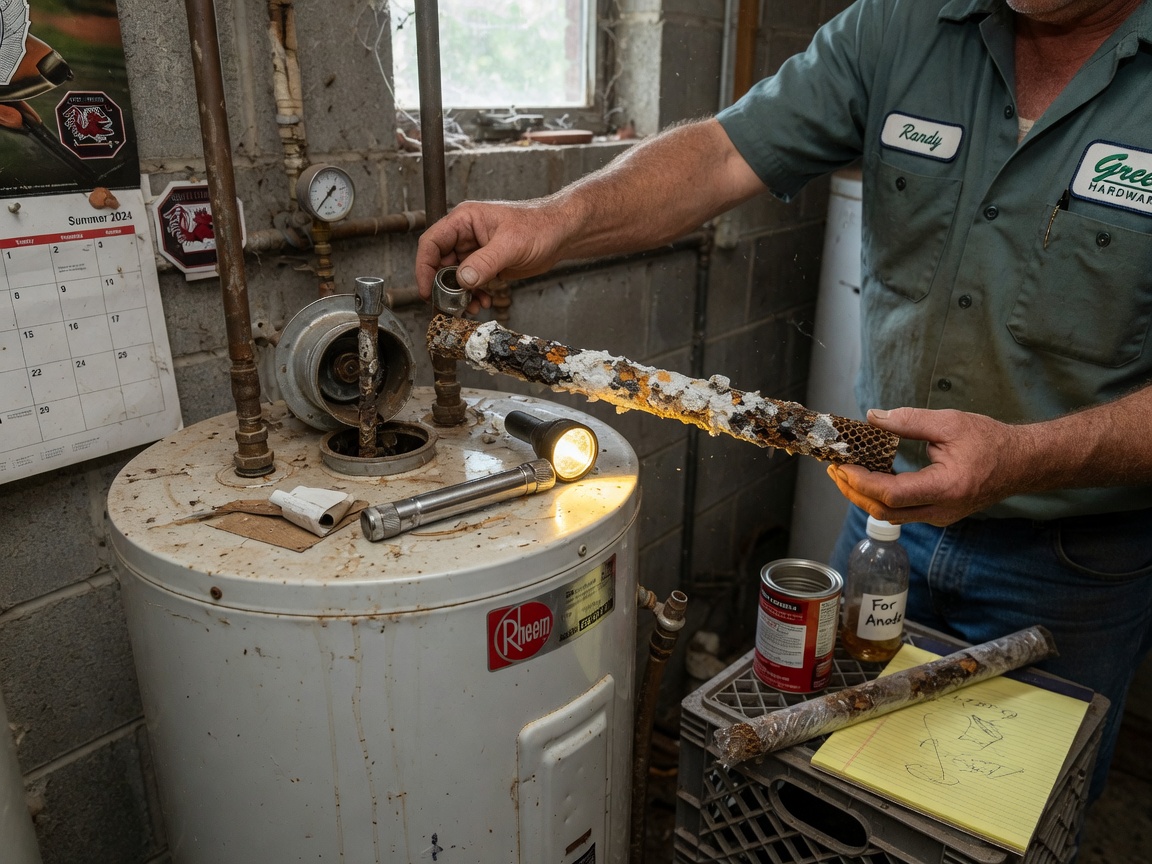
Checking your water heater anode rod before summer means inspecting it every 2 to 3 years in Greer homes to catch corrosion early. In Greenville County's humid subtropical climate with hot summers, mineral-rich water speeds up rod depletion, especially in older housing stock around Downtown Greer and Suber Mill. This timing prevents leaks or efficiency drops when temperatures rise and usage increases near landmarks like Greer City Park.
Why Anode Rod Checks Matter Before Summer
Anode rods sacrifice themselves to protect steel tanks from rust in Greer's water conditions. Hot summers increase water temperature and expansion, putting extra stress on tanks that have already endured mild winters. Homes in Pelham and near the Swamp Rabbit Trail often feature 15- to 25-year-old construction where rods may be nearing replacement. Skipping the check can lead to tank failure right when families need reliable hot water most. Local patterns show that addressing the rod early avoids emergency calls during peak heat.
Water quality in Greenville County varies by neighborhood, with higher sediment in some Suber Mill wells affecting rod life. Checking before summer lets you plan around milder weather instead of dealing with issues when the BMW Performance Center area sees more activity. This step fits naturally into maintenance routines for properties along routes to Spartanburg or Simpsonville.
Signs Your Anode Rod Needs Attention
Look for rusty water from faucets or a sulfur smell as early indicators in Greer households. Reduced hot water volume or popping noises during heating cycles also point to rod wear in humid conditions. Tanks in 40-gallon or 50-gallon sizes common to Downtown Greer homes show these symptoms faster when summer humidity raises indoor moisture levels. Inspect visually if possible by removing the hex head at the top of the unit. These clues help decide whether to schedule service at 601 Poplar Dr before temperatures climb.
Compare current performance to last winter using the related guide on how Greer winters affect water heater performance. If sediment buildup appears alongside rod issues, consider linking to water heater replacement options for long-term fixes.
Step-by-Step Inspection Process
Turn off power or gas and shut the cold water supply first. Drain several gallons from the tank to lower pressure safely. Remove the anode rod using a socket wrench, checking for less than 50% remaining material. Measure length and diameter if the rod is accessible without full removal. Reinstall or replace with a magnesium or aluminum model suited to local water. This process takes 30 to 60 minutes on most units in Pelham Falls homes.
Always test for leaks after reassembly and restore power or gas gradually. Homeowners in areas like Cannon Crossing benefit from doing this before summer travel peaks. If the rod is inaccessible or the tank shows external rust, professional evaluation prevents bigger problems during hot months.
When Replacement Becomes Necessary
Rods that are completely depleted signal the need for a new tank in many Greenville County properties built before 2000. Summer heat expands water and can worsen small leaks that form once protection is gone. Factors like tank age and water hardness influence costs, as outlined in the article on factors that influence water heater repair costs in Greer. Replacement often runs alongside checks for valves or expansion tanks in older Suber Mill residences.